
Can Bangladesh’s New Human Rights Commission Enter Aynaghar?
If the law cannot answer yes, it is not ready for parliament.
On July 2, a public consultation in Dhaka raised a question that should stop the proposed National Human Rights Commission law in its tracks.
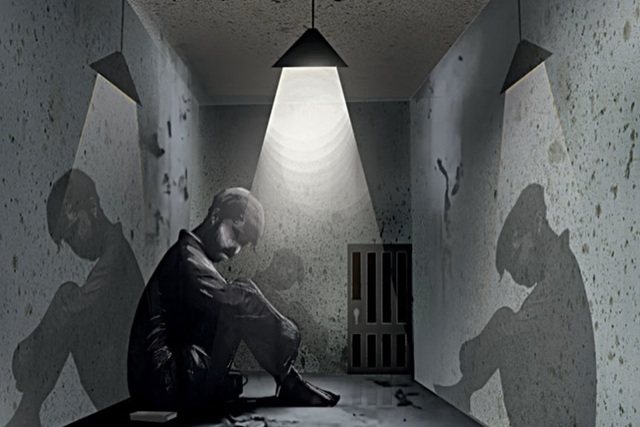
Would the commission be able to enter a suspected secret detention centre such as Aynaghar?
The draft does not clearly say yes.
That is not a minor drafting omission. It goes to the heart of what Bangladesh’s Human Rights Commission is supposed to do. A commission that can organise seminars, receive complaints and write reports, but cannot enter a locked detention site or independently investigate the force accused of running it, is not a safeguard against abuse. It is an office built around the limits imposed by the accused.
Transparency International Bangladesh has warned that Section 13 of the draft does not clearly authorise inspections of suspected secret detention facilities operated by law enforcement, intelligence or surveillance agencies. The concern was repeated at the July 2 consultation, weeks after the government released the draft for public comment.
This is why the debate over the National Human Rights Commission Act, 2026, cannot be treated as a technical dispute among lawyers.
Bangladesh is still confronting the legacy of enforced disappearance, torture, custodial death and secret detention. Aynaghar is no longer a rumour whispered by victims’ families. It has become a national symbol of what happens when state power is allowed to operate behind locked doors and beyond independent scrutiny.
Any new human rights law must therefore pass a simple test. Can the commission enter the locked room? Can it obtain the hidden file? Can it question the officer in charge? Can it begin an investigation without first seeking permission from the government?
Under the current draft, the answers are deeply troubling.
The proposed procedure for complaints against members of the disciplined forces would prevent the commission from carrying out a genuinely independent investigation. Instead, it would have to rely on a report from the government or from the chief of the very force whose member stands accused.
Consider what this means.
If a family alleges that a police officer tortured a detainee, the commission would ask the police for a report. If an intelligence agency is accused of holding someone in secret, the commission would depend on information supplied by the state. If members of a security force are accused of an enforced disappearance, the institution meant to investigate the allegation would wait for the accused organisation to explain itself.
That is not independent investigation. It is official correspondence.
Thirteen international human rights organisations, including Amnesty International, Human Rights Watch, Odhikar and the World Organisation Against Torture, have warned that the draft would leave the commission without meaningful power to compel testimony, inspect premises, obtain documents or verify facts independently in cases involving security agencies.
The problem does not end with investigations.
The draft would also give a government-dominated committee a central role in selecting the chairperson and commissioners. Independent representatives included under the 2025 ordinance, including representatives from the media and ethnic minority communities, have been removed. Ministers and senior government officials return to the appointment process.
This is a basic conflict of interest.
The people who exercise state power should not dominate the selection of those responsible for investigating abuses of that power.
The issue is not whether a minister may nominate an honest person. The issue is whether the law protects the commission when the government does not want to be investigated.
Good institutions are not designed on the assumption that everyone in office will behave well. They are designed for the day when someone does not.
Bangladesh came unusually close to addressing these problems in 2025. The National Human Rights Commission Ordinance gave the commission stronger investigative authority, including the power to investigate allegations involving disciplined forces. It also created a more diverse appointment process and placed clearer limits on executive interference.
A five-member commission was appointed on February 5, 2026. On April 9, parliament repealed the ordinance by voice vote and restored the 2009 law. Four days later, the commissioners said that the legal basis for their appointments had disappeared and that they had ceased to hold office. The commission created with such expectation lasted only 67 days.
The government has defended the repeal. The law minister argued in parliament that the 2025 ordinance contained ambiguities, raised concerns about victims’ rights and required further consultation. He described the restoration of the 2009 law as a temporary measure intended to prevent a legal vacuum.
A government is entitled to review a law. It is entitled to correct ambiguity. It is entitled to consult victims and experts.
But review cannot mean restoring the very defects that reform was meant to remove.
If the 2009 framework was only a temporary bridge, why does the new draft carry forward its most damaging features? Why does executive influence return to the appointment process? Why is there no clear and unconditional power to investigate the disciplined forces? Why is the commission not expressly authorised to enter every suspected place of detention?
These are not abstract questions. They determine whether the next victim of state abuse will find an investigator or a reception desk.
The draft also removes the clear statement that the commission will not operate under any ministry or government division. Its budget, internal rules and staffing remain vulnerable to executive influence. Up to 30 percent of its staff may come on deputation from the civil service.
No one is suggesting that civil servants are inherently incapable of independence. But a human rights body should not rely heavily on officials whose careers remain controlled by the same executive institutions the commission may need to investigate.
The draft narrows the commission’s wider role as well. Functions relating to human rights defenders, marginalised communities, civil society cooperation, treaty review, legislative scrutiny and human rights education have been removed or weakened. International rights groups have warned that the cumulative effect would turn a broad national human rights institution into a limited complaint-handling mechanism.
That would also carry an international cost.
Bangladesh’s commission currently holds only B status under the international accreditation system for national human rights institutions. B status means partial compliance with the Paris Principles, the global standards on independence, pluralism, powers and resources. A-status institutions can participate independently in important UN human rights proceedings. B-status bodies cannot vote or hold governance positions within the global alliance.
Bangladesh has been warned before about political influence over appointments and the inability of the commission to investigate security forces. The new draft does not solve those weaknesses. It risks writing them back into law.
This matters now more than ever.
A political transition born from public resistance to unaccountable power cannot credibly reproduce the legal structures that protected unaccountable power. A government that promises justice for the abuses surrounding July 2024 cannot simultaneously create a commission that depends on the executive and defers to the security forces.
The contradiction is too serious to hide behind legislative language.
The solution does not require starting again from nothing.
The law should restore the explicit guarantee that the commission is independent of every ministry and government division. The selection committee should include the opposition, civil society, independent professionals and representatives of marginalised groups. The commission should have direct authority to investigate every public body, including the police, military and intelligence agencies.
It should be able to summon witnesses, obtain documents, inspect records and make unannounced visits to every place where a person may be detained. Its budget should be protected from executive retaliation. Deputed officials should form only a small part of its staff.
Most importantly, the provision that makes the commission dependent on reports from the government or the accused force must be removed.
Before the bill is placed before parliament, the government should publish a revised draft and answer three questions in plain language.
Can the commission investigate a security agency without government permission?
Can it enter any suspected detention site without prior notice?
Can it compel the production of documents and testimony from the force under investigation?
Unless the answer to all three is an unqualified yes, the law is not ready.
Bangladesh does need its Human Rights Commission back. But the country does not need another signboard, another chairperson and another institution that becomes cautious whenever power enters the room.
It needs a commission that can open the locked door.
Especially when the door is called Aynaghar.